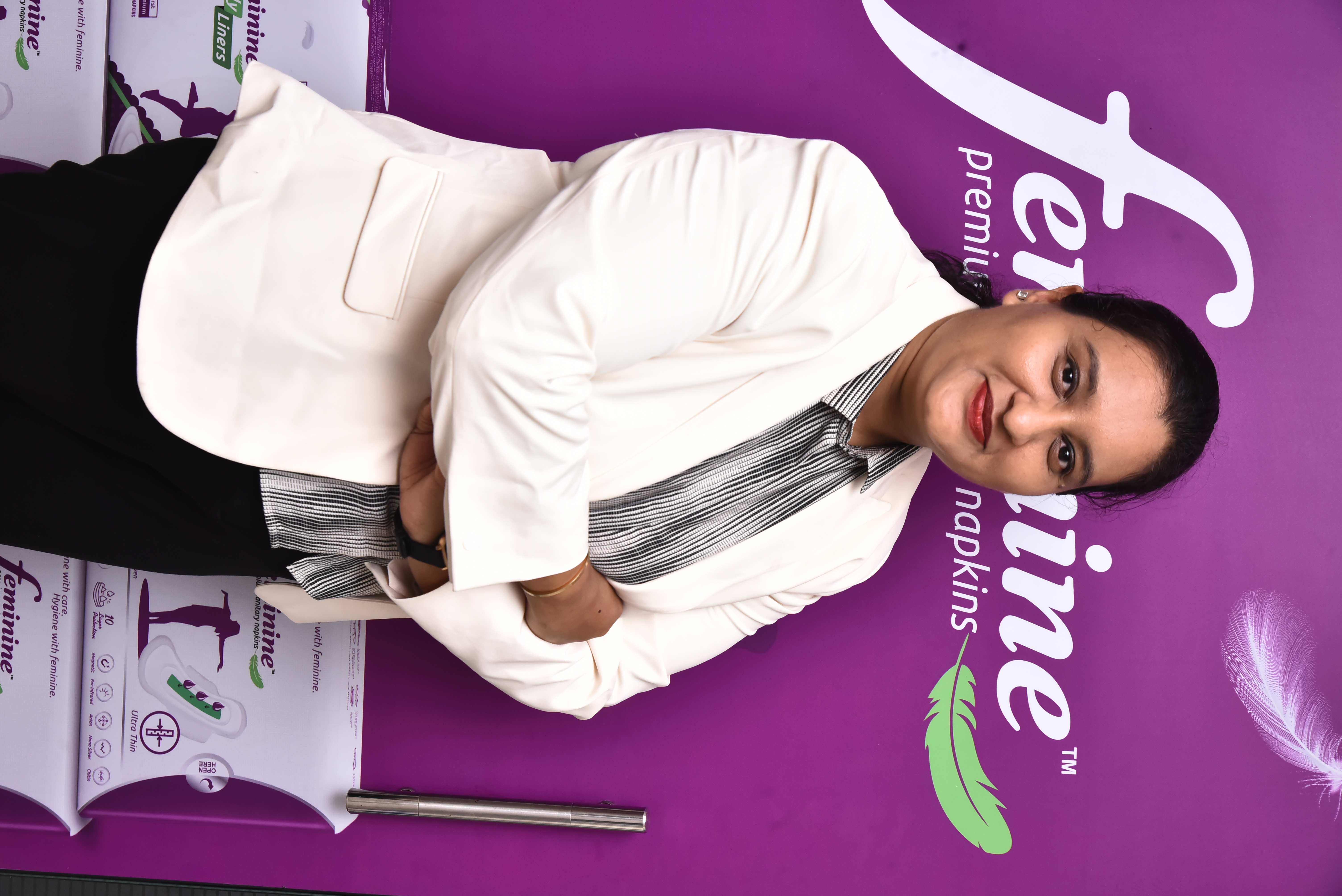
Start writing article contentMost period products on store shelves come wrapped in vague promises, hidden ingredient lists, and blue liquid advertisements that reveal almost nothing about what actually touches your body. Breaking that status quo requires looking at menstrual care from a health, safety, and education perspective rather than purely as a retail product. Dr Sayali Kulkarni, the founder of Feminine Premium Sanitary Napkins, has built her brand on strict clinical safety, radical packaging transparency, and real health education.
The vulvar skin is delicate and
sensitive, and can be susceptible to irritation from unsuitable materials,
fragrances, or other irritants. Instead of treating sanitary pads as ordinary
consumer products, she believes they should be developed with careful attention
to skin compatibility, safety, hygiene, and comfort. Depending on the nature of
the product, appropriate dermatological, skin-compatibility, and quality
assessments are carried out before it reaches consumers. The goal is to develop
intimate-care products with safety, hygiene, and comfort at the forefront,
while avoiding unnecessary fragrances or substances that may cause irritation.
"Safety and skin compatibility are our priorities," she explains.
Feminine Premium Sanitary Napkins
fully discloses every layer and ingredient across its packaging and website
alongside clear, evidence-based guidance. "Transparency is extremely
important to us," Dr Kulkarni states. We believe consumers should have
clear information about the materials and components used in menstrual-care
products. Feminine Premium Sanitary Napkins provides product and material
information on its packaging and website, along with usage instructions and
relevant precautions.”
However,
even well-designed products and clear labels only go so far if the product is
misused once it leaves the store. In her view, product safety and user habits
are inseparable. Even a well-designed pad needs to be used appropriately.
Prolonged use can increase moisture, discomfort, and the risk of irritation,
which is why regular changing is important. Sanitary pads should generally be
changed every four to six hours, or sooner if they feel damp, heavily soiled,
or uncomfortable. The brand deliberately avoids recommending tampons, and while
menstrual cups can safely be worn for eight to twelve hours, they require
proper technique, strict hand hygiene, and thorough sterilisation before reuse.
This
emphasis on habits reveals a key truth: products solve physical needs, but
education fixes hygiene mistakes. Knowing product standards means little
without body literacy and practical health education, which is why Dr Kulkarni
takes her women’s health education initiatives into local communities.
Partnering with schools, non-profits, and corporate groups, she runs workshops
on puberty, intimate hygiene, and body literacy, replacing stigma and myths
with facts that protect health long after a period ends.
Dr Sayali Patil-Kulkarni
Ph.D. — Women’s Health Educator,
Social Entrepreneur and Founder of Feminine Premium Sanitary Napkins.