
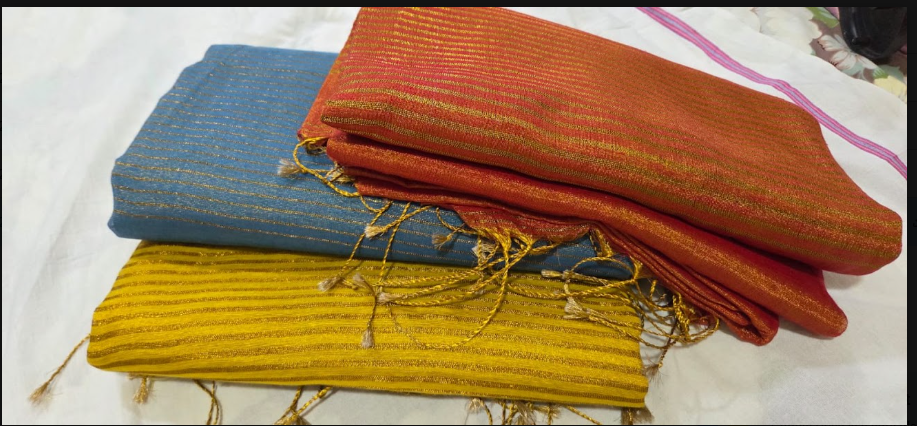
No, though handlooms are naturally priced higher because they are handmade. To understand why, it helps to look at what handloom actually means. A handloom is fabric woven on a loom by a human artisan rather than produced entirely by machines. Because of that human involvement, every saree carries its own unique character, meaning no two pieces are ever completely identical. Traditional weaving relies on natural fibers like pure silk, pure cotton, silk-cotton (SiCo), linen, and wool, often dyed using traditional plant-based colors.
India has an
incredibly rich weaving heritage, with 136 unique traditional handloom weaves.
from the classic Paithani of Maharashtra and Ikat of Telangana to Ilkal, Katan
Banarasi, Maheshwari, Chanderi, and Kanchipuram. Because the process is highly
skilled and labour-intensive, intricate designs require more time, which
naturally reflects in the cost.
Contrary to
popular belief, handloom does not
automatically mean luxury-tier pricing. You can find beautiful, breathable
handloom sarees, such as Mul Cotton, Patteda Anchu, and Bengal Cotton, starting
around ₹2,000. On the other hand, organic cottons, pure silks, and complex
silk-cottons command higher prices based on the yarn, intricacy, and hours of
craftsmanship involved.
When buying from a large retail brand,
the price tag often includes overheads like store infrastructure, marketing,
and packaging, making the final cost significantly higher than the actual
weaving value. While buying directly from a weaver is more economical, it isn't
always practical for everyday buyers. That is where trusted small businesses
step in.
Brands like AMAASTYA were built on the
belief that authentic handlooms should remain accessible through honest,
transparent pricing and direct weaver relationships, proving that “every
purchase should feel like the right decision, not an expensive one.” However,
when shopping, authenticity is key. The textile market is currently flooded
with synthetic fabrics and powerloom creations masquerading as pure silk and
genuine handloom. Discerning buyers should look closely to ensure they are
investing in true craftsmanship rather than a clever imitation. So ask questions. Understand the weave. Feel
the fabric. Know what you are paying for.
“Handloom is not
just a saree. It is skill, time, tradition and the hands of a weaver woven into
every thread.”