
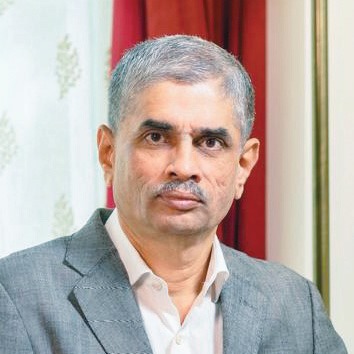
By: Vidyadhar Vaishampayan, Former Chairman (2004-2014) and Director (1994-2019), TJSB Sahakari Bank
February 5, 2026. Today is the Foundation Day of our beloved TJSB Bank! My association with this institution dates back to 1994. It brings immense pride to witness this journey, which began in a small office in Thane and has now reached the milestone of becoming India’s fifth-largest cooperative bank. During my ten-year tenure as Chairman, we took giant leaps across all sectors. However, as I look back today in 2026, I feel this is not just a time to celebrate our past success, but a moment to prepare ourselves for the challenges of the future.
- From ‘Brick and Mortar’ to Virtual Banking (The Shift to Virtual)
The world of banking has undergone a fundamental transformation. As Brett King stated in his book Bank 4.0, “Banking is no longer a place you go, but something you do.”
Previously, a bank’s strength was measured by its number of physical branches (Brick & Mortar). Today, however, is the era of Virtual Banking. The new generation finds it more convenient to conduct ‘Zero-Touch’ transactions via mobile rather than visiting a branch in person. Therefore, TJSB must look beyond just physical expansion and adopt a ‘Phygital’ model—a blend of ‘Physical’ trust and ‘Digital’ speed. If a customer cannot avail of a loan or open an account from the comfort of their home, we risk falling behind the competition. We must transition toward becoming an ‘Invisible Bank’ that is available 24/7 in the customer’s pocket (smartphone).
- The ‘One-Stop Financial Supermarket’ (One-Stop Solution)
Deepak Parekh, the former Chairman of HDFC Bank, always emphasised one thing: Diversification. TJSB can no longer afford to remain just a ‘deposit and loan’ bank. We must become a ‘One-Stop Solution’ for every financial need of our customers.
Services such as Insurance, Mutual Funds (SIP), Stock Brokering, and Tax Planning should all be available under one roof. When a customer joins TJSB, we should be equipped to manage their entire Financial Lifecycle. This approach increases ‘Customer Stickiness’—meaning a customer who avails of all their financial services through us will never leave our side.
- RBI Guidelines and Discipline (Regulatory Compliance)
In today’s banking landscape, Reserve Bank of India (RBI) regulations are not merely a ‘checklist’ but our protective shield. Especially as one of the top five cooperative banks in the country, the eyes of the regulators are always upon us. Our policy regarding Regulatory Compliance must be one of ‘Zero Tolerance.’
We must adhere strictly to rules—not just to avoid penalties, but to safeguard the bank’s image and maintain customer trust. A ‘Risk-based Supervision’ and a deep-rooted ‘Compliance Culture’ must be evident at every level of our operations. Adherence to regulations is not a hurdle; it is our strength.
- Asset Quality: The True Measure of Progress (Asset Quality & NPA)
The health of any bank is measured not by the figures on its balance sheet, but by its Asset Quality. Disbursing loans is easy, but ensuring that the money returns safely with interest is the true skill.
Our goal should not just be to grow the ‘Loan Portfolio,’ but to build a ‘Quality Loan Portfolio.’ We must never forget the mantra: “Quality over Quantity.” If our asset quality is excellent and NPAs (Non-Performing Assets) are under control, only then can we withstand any future economic crisis. Every employee must stay alert to ‘Early Warning Signals’ and uphold a culture of disciplined loan recovery.
- Challenges Facing Mid-Sized Banks (The Mid-Size Squeeze)
Today, mid-sized banks like TJSB are caught in a pincer movement. On one hand, large private banks have massive capital for technology, while on the other, new Fintechs are expanding rapidly.
We face several key threats:
Cyber-Resilience: In 2026, data theft or cyber-attacks are the greatest risks. Investment in cyber security is not an expense; it is an insurance policy.
The Talent War: Tech-savvy youngsters are gravitating toward big tech companies. To attract them, we must modernise our Work Culture.
Data Utilisation (Data Analytics): Large banks use Artificial Intelligence (AI) to predict exactly when a customer needs a loan. We must treat ‘Data’ as the new ‘Fuel’ and utilise it effectively.
- An Appeal to Employees and Management
To the Board of Management: The time has come to be ‘Innovators’ rather than just ‘Administrators.’ Do not fear the adoption of new technology or change. Cloud Banking and AI are the needs of the hour.
To my Dear Employees: No matter how much technology advances, the soul of the cooperative sector remains the ‘Human Touch.’ A machine can calculate accounts, but it cannot empathise with a customer’s problems. Every employee must act as both a ‘Risk Manager’ and a ‘Relationship Manager’ for the bank.
Conclusion
TJSB’s legacy is built on Trust. As Deepak Parekh once said, “Trust is our biggest product.” We must carry this trust into 2030, wrapping it in the framework of modern technology, RBI discipline, and superior asset quality. We must build a bank that is as fast as a Fintech, as secure as a large bank, and as compassionate as a cooperative.
Warmest wishes to all of you on this Foundation Day!
Sahkar se Samriddhi! (Prosperity through Cooperation!)