
We often hear that love is all you need,
as if a house full of warmth can magically smooth over every rough edge of
growing up. Every household feels this quiet undercurrent of tension at some
point, and we convince ourselves that because we care deeply, everything else
should just fall into place. After all, isn't love the ultimate goal in life?
However, as traditional joint families
fade into smaller, single-child households, children often find themselves at
the center of undivided attention. When everything is just a click away and the
word "no" is rarely heard, kids are rarely given the chance to face
struggle or delay gratification. Without those moments of friction, the natural
appreciation for time, money, and effort slowly slips away.
"Value for money, value for time,
and value for material gratitude is lacking a lot,” Neelam Tiwari notes.
When teenagers suddenly pull away and
build thick emotional walls, it is easy for parents to misread that distance as
simple teenage rebellion. But more often than not, that guarded silence is just
a child’s quiet defense against being judged. When feelings are dismissed or
met with constant comparisons, teens learn that opening up only leads to
disappointment, sometimes turning to manipulation simply as a way to navigate a
household that feels too heavy to face honestly.
To resolve this, Neelam Tiwari urges a
shift toward patient, present parenting. Rather than invalidating a child's
character, parents must offer a non-judgmental ear, addressing specific
behaviors constructively while dedicating intentional, one-on-one time to make
children feel genuinely heard. For fostering self-awareness, self love is
important and that can be empowered by 21 days of mirror work, a framework
designed by metaphysical teacher of love Louise Hay. “Knowledge without
awareness is powerless," this 21-day program uses daily journaling,
affirmations, and Q&A prompts to replace finger-pointing with honest
self-reflection, helping families cultivate mutual understanding and self-love.
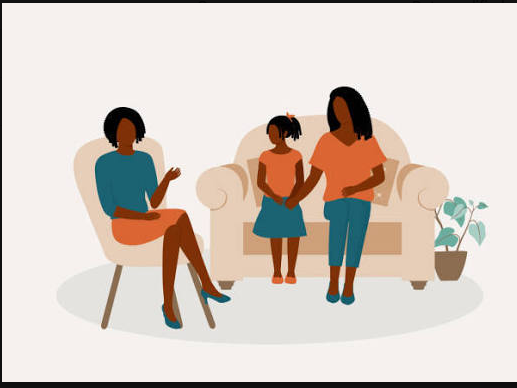
Finding a safe space, whether through
honest conversations at home or professional counselling, matters so much. When
the walls get too thick to break down on our own, having a judgment-free space
to talk things through lets families breathe, heal, and truly hear each other
again.
Neelam Tiwari, Psychologist &
Counselor
Parenteen Coach, Heal Your Life Teacher
and Facilitator
9650108534